

What is a facelift, and who needs one?
A facelift, also known as rhytidectomy, is a surgical procedure that aims to improve the visible signs of aging in the face and neck. It involves removing excess facial skin, tightening underlying tissues, and repositioning the skin to create a more youthful and rejuvenated appearance. Facelifts can address issues such as sagging skin, deep creases, jowls, and loss of muscle tone in the face and neck. The procedure is typically performed by a plastic surgeon and can be combined with other facial rejuvenation techniques, such as eyelid surgery or brow lift, for more comprehensive results.
The duration of a face lift procedure can vary depending on various factors, including the extent of the surgery and whether any additional procedures are being performed. On average, a facelift surgery typically takes around 2 to 4 hours to complete. However, it's important to note that the actual time can vary from patient to patient. The surgeon will provide a more accurate estimate during the consultation, taking into consideration the individual's specific needs and goals.
The recovery period after a facelift can vary from person to person, but generally, it takes about 2 to 3 weeks for most of the visible swelling and bruising to subside. During the first few days after the surgery, patients may experience discomfort, swelling, and bruising, which can be managed with pain medication and cold compresses.
Patients are typically advised to keep their head elevated and avoid strenuous activities for the first week or two. Stitches or staples are usually removed within the first week, and some patients may require a compression garment to help reduce swelling.
Deep Plane Facelift
A Deep Plane Facelift is an advanced facial rejuvenation surgery that lifts the deeper structural layers of the face, not just the skin. It’s widely considered one of the most natural-looking and longer-lasting facelift techniques because it repositions the SMAS (Superficial Musculoaponeurotic System) and underlying facial tissues as a single unit.
How It Works
- Traditional facelifts mainly tighten loose skin. A deep plane facelift goes further:
- The surgeon makes incisions around the hairline and ears.
- The skin is lifted carefully.
- The deeper SMAS layer and facial ligaments are released.
- The surgeon repositions the cheek, midface, jawline, and neck tissues together.
- Excess skin is trimmed and incisions are closed.
Because the skin isn’t pulled tight on its own, results usually look softer and more natural.
What Areas It Improves
A deep plane facelift can correct:
- Sagging cheeks and midface
- Nasolabial folds (smile lines)
- Jowls
- Loose jawline
- Neck sagging
It’s especially known for lifting the midface, something many other facelift types struggle to do.
Results & Longevity
- Results typically last 10–15 years
- Provides strong midface lifting
- Faces look restored rather than “pulled”
Many surgeons combine it with:
- Neck lift
- Fat grafting
- Blepharoplasty (eyelid surgery)
Recovery Timeline
Typical recovery:
- Week 1: swelling and bruising peak
- Week 2–3: swelling decreases significantly
- 3–4 weeks: most people look socially presentable
- 3–6 months: final results settle
Risks
Like any surgery, risks include:
- Nerve injury (rare but possible)
- Hematoma
- Infection
- Prolonged swelling
- Scarring
Choosing a highly experienced facial plastic surgeon is critical because this technique is technically demanding.
SMAS Facelift
A SMAS facelift is a common type of facelift that tightens and repositions a deeper facial layer called the SMAS (Superficial Musculoaponeurotic System) rather than just pulling the skin.
The SMAS is a fibrous layer of tissue that connects facial muscles to the skin, and it plays a big role in how the face moves and ages.
What the SMAS Layer Is
The face has several layers:
- Skin
- Fat
- SMAS layer
- Deeper muscles and structures
With aging, the SMAS layer loosens and droops, causing:
- Jowls
- Sagging jawline
- Deep smile lines
- Loose neck skin
A SMAS facelift tightens this layer to lift the face more naturally.
How a SMAS Facelift Works
Typical surgical steps:
- Incisions are made around the ear and hairline.
- The skin is gently lifted.
- The surgeon tightens, folds, or repositions the SMAS layer.
- Excess skin is trimmed.
- Skin is redraped and sutured.
Because the structural layer is lifted, the skin doesn't need to be pulled tightly.
What Areas It Improves
A SMAS facelift mainly improves the lower two-thirds of the face:
- Jowls
- Jawline definition
- Lower cheeks
- Nasolabial folds (to some extent)
- Mild neck sagging
It’s less powerful for lifting the midface (cheeks) than a deep plane facelift.
Results & Longevity
Typical results:
- Natural-looking lift
- Reduced sagging in the jawline and lower face
- Improved facial contour
Results usually last about: 7–10 years
Recovery Timeline
Typical healing process:
- 1 week: swelling and bruising
- 2 weeks: stitches removed / noticeable improvement
- 3–4 weeks: most people look normal socially
- 3 months: final results settle
| Feature | Regular Facelift (SMAS) | Deep Plane Facelift |
|---|---|---|
| Tissue lifted | Skin + tightened SMAS | Skin, fat, SMAS lifted together |
| Midface lift | Limited | Strong improvement |
| Natural look | Good but can look tight | Very natural |
| Longevity | ~7–10 years | ~10–15 years |
| Surgical difficulty | Moderate | Advanced technique |
| Recovery | Slightly faster | Slightly longer |
Simple way to understand it:
- Regular facelift (SMAS): Tightens the outer layers.
- Deep plane facelift: Repositions the entire facial structure underneath.
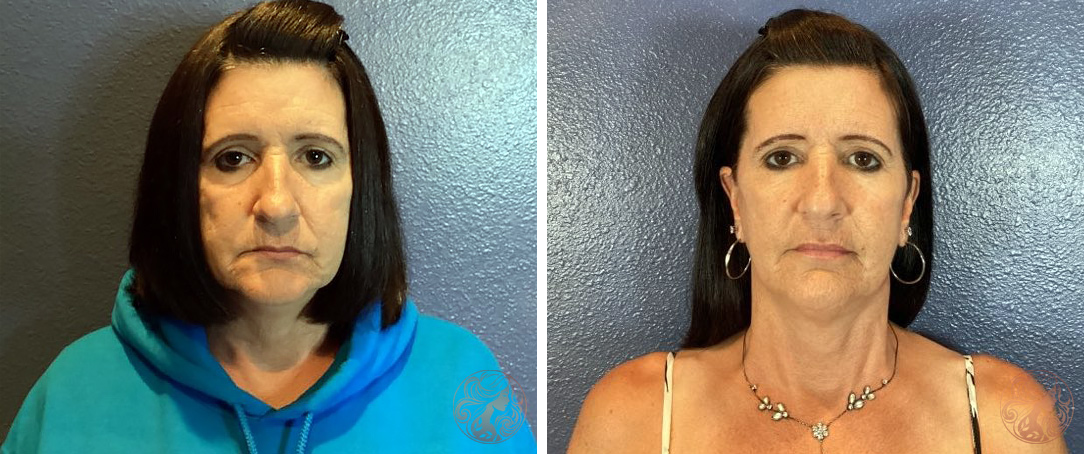
Face Lift Before & After Photo Gallery
What is the face-lift recovery process like?
It's important to note that individual recovery experiences can vary, and it may take several months for all swelling to completely resolve and for the final results of the facelift to be fully apparent. It's recommended to follow the post-operative care instructions provided by the surgeon and attend follow-up appointments to ensure proper healing and optimal results.
The longevity of face lift results can vary from person to person, as it depends on various factors such as genetics, lifestyle, and the natural aging process. Generally, the results of a facelift can last for about 7 to 10 years. However, it's important to note that the face will continue to age naturally after the procedure.
What are the benefits of a facelift?
The results of a facelift can vary depending on several factors, including the individual's age, skin quality, and overall health. Generally, a facelift can provide the following results:
- Reduction of wrinkles and fine lines: A facelift can smooth out deep wrinkles and fine lines, particularly around the eyes, mouth, and forehead.
- Tightening of sagging skin: The procedure can lift and tighten loose or sagging skin in the face and neck, resulting in a more youthful and defined appearance.
- Improvement in facial contours: A facelift can restore or enhance facial contours by repositioning and tightening the underlying tissues, including the muscles and fat pads.
- Restoration of a more youthful jawline and neck: By removing excess skin and tightening the underlying tissues, a facelift can create a more defined jawline and reduce the appearance of a double chin or jowls.
- Boost in self-confidence: Many individuals report feeling more confident and satisfied with their appearance following a facelift, as it can help them look and feel younger.
What other adjuncts can help, along with a facelift, for preserving my beauty?
It's important to note that the results of a facelift are not permanent, as the face will continue to age naturally. However, the procedure can provide long-lasting improvements that can last for several years. Maintaining a healthy lifestyle, including proper skincare and sun protection, can help prolong the results of a facelift.
While a facelift can effectively address signs of aging, it does not stop the aging process altogether. Over time, the skin may gradually lose elasticity, and new signs of aging may develop. Some individuals may choose to undergo additional procedures or non-surgical treatments to maintain or enhance their results.
It's important to have realistic expectations and understand that the longevity of face lift results can vary. Regular skincare, sun protection, and a healthy lifestyle can help prolong the effects of a facelift and maintain a more youthful appearance. Consulting with Dr. Viradia, our plastic surgeon, can provide more personalized information about the expected duration of results based on individual circumstances.
Why Choose Viradia Plastic Surgery?
An ASPS Plastic Surgeon Innovator of the Year award recipient, Dr. Viradia has been trained by world-class facial plastic surgeons and plastic & reconstructive surgeons, where he has learned multiple advanced facelift techniques. He has helped patients regain their confidence and look refreshed through cosmetic and reconstructive results. He has treated patients with techniques that not only remove the excess skin but also involve facial muscle suspension, tightening, and repair to bring the best overall results to the patient to promote longevity of the procedure, giving them a natural look. Well-versed in the anatomy of the face, Dr. Viradia can customize unique treatment plans that fit the patient’s goals. The results have been amazing for his patients.
Dr. Viradia's unique strength lies in offering patients a wide variety of surgical procedures, including breast lifts and augmentations, facelifts, butt lifts, blepharoplasty, rhinoplasty, browlifts, neck lifts, fat grafting to the face and hands, and more, while leveraging the latest and most innovative medical advancements to provide you with the best possible results and experience. The results have been exceptional for his patients.
Dr. Viradia is committed to providing you with services and procedures tailored to your individual needs. Contact us today to schedule your consultation.